





Product Category
Insulated Terminals
Ring, fork, blade, pin and more with high-quality insulation.
Ring, fork, blade, pin and more with high-quality insulation.
Phoenix insulated terminals are produced from T2 copper with a tin-plated barrel and PVC insulation that stays hard, does not crack and does not rebound. The range covers 0.5–6 mm² (22–10 AWG) wire with red, blue, black and yellow colour coding, manufactured to US, Japanese and German standards.
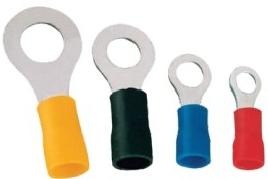
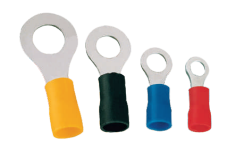
RV Series ring insulated terminals have a copper terminal body with a colour-coded PVC sleeve that stays hard, does not crack and does not rebound. The closed ring encircles the stud completely, so the joint cannot pull free under vibration.
View Series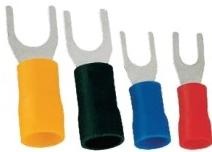
SV Series fork insulated terminals use the same copper body and colour-coded PVC sleeve as the ring series, with an open fork mouth that slides under a loosened screw — no need to remove the fastener during assembly or service.
View Series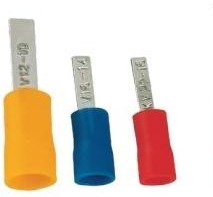
DBV Series blade insulated terminals have a copper body with a colour-coded PVC sleeve. The flat tab fits standard 2.8 mm, 4.8 mm and 6.3 mm quick-disconnect receptacles, so the connection can be pulled apart without tools. Suitable for 22–10 AWG copper wire and rated for 600 V.
View Series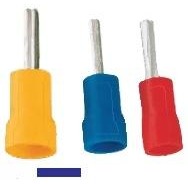
PTV Series pin insulated terminals end-mount stranded copper wire with a solid round pin that plugs directly into relay sockets, PCB connectors and spring-cage blocks. The PVC sleeve is colour-coded to wire cross-section. Suitable for 22–10 AWG and rated for 600 V.
View Series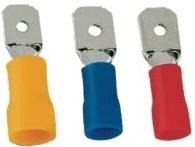
MDD Series male disconnect terminals feature a flat copper tab inside a colour-coded PVC or nylon shroud. The tab plugs into a matching female receptacle for a secure yet separable connection. Used in automotive harnesses, appliance wiring and control panels.
View Series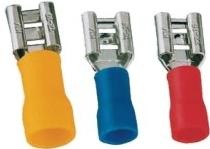
FDD Series female disconnect terminals accept a matching male blade into a copper contact housed in a colour-coded PVC or nylon sleeve. The sleeve prevents accidental contact with live metal. Suitable for the same wire and voltage range as the MDD male series.
View Series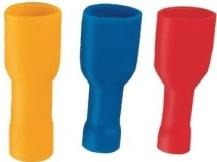
FDFD Series fully insulated disconnect terminals encase the entire contact in nylon so there is no exposed metal on either the male or female half. This double-insulated design is mandatory in high-density wiring where accidental bridging between adjacent connectors must be prevented.
View Series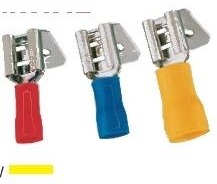
PBDD Series hook terminals have the same copper body as the blade disconnect family but with a 90° bend in the tab so that the mating connector faces sideways. This right-angle exit is chosen where wire must route parallel to the panel surface without a sharp reverse bend.
View Series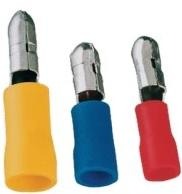
MPD Series male bullet terminals have a round copper pin inside a colour-coded PVC sleeve. The 4 mm bullet pin mates with a matching female receptacle to form a push-on connection widely used in automotive lighting, motorcycle wiring and low-voltage equipment.
View Series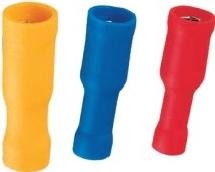
FRD Series female bullet terminals accept the 4 mm male bullet pin inside a copper socket housed in a colour-coded PVC sleeve. The spring contact grips the pin firmly enough to resist vibration while still allowing manual disconnection. Standard in automotive, marine and motorcycle harnesses.
View Series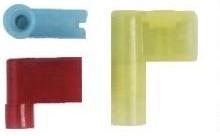
FLDNY Series flag terminals exit the wire at 90° to the tab, so the crimped wire runs parallel to the mounting surface rather than doubling back. This reduces bend stress on the conductor and saves space in crowded panel wiring. Colour-coded nylon or PVC sleeve for 22–10 AWG.
View SeriesAll 15 insulated series side by side — compare terminal shape, wire range, connection dimensions and insulation material.
| Series | Terminal Shape | Wire Range | Stud / Tab / Pin Dimensions | Insulation |
|---|---|---|---|---|
 RV |
Ring | 0.5–6 mm² (22–10 AWG) | #4–1/2" stud (3.2–12.5 mm) | PVC |
|
SV
|
Fork | 0.5–6 mm² (22–10 AWG) | #4–5/16" stud (3.2–8.2 mm) | PVC |
|
DBV
|
Blade | 0.5–6 mm² (22–10 AWG) | 2.3–4.5 mm blade width | PVC |
|
PTV
|
Pin | 0.5–6 mm² (22–10 AWG) | 10 / 13 / 18 mm pin length | PVC |
|
MDD
|
Male disconnect | 0.5–6 mm² (22–10 AWG) | 2.8 / 4.75 / 6.35 mm tab (110 / 187 / 250) | PVC |
|
FDD
|
Female disconnect | 0.5–6 mm² (22–10 AWG) | 2.8 / 4.75 / 6.35 mm tab (110 / 187 / 250) | PVC |
|
FDD Full
|
Female disconnect | 0.5–6 mm² (22–10 AWG) | 2.8 / 4.75 / 6.35 mm tab, fully covered barrel | PVC |
|
PBDD
|
Hook | 0.5–6 mm² (22–10 AWG) | 6.35 mm hook (250) | PVC |
|
MPD
|
Male bullet | 0.5–6 mm² (22–10 AWG) | 4.0–5.0 mm bullet (156 / 195) | PVC |
|
FRD
|
Female bullet | 0.5–6 mm² (22–10 AWG) | 3.9–4.9 mm bullet (156 / 195) | PVC, fully insulated |
|
FLDNY
|
Flag | 0.5–6 mm² (22–10 AWG) | 6.35 mm flag (250) | Nylon |
|
MRFNY
|
Male spring | 0.5–6 mm² (22–10 AWG) | 4.0–5.0 mm bullet (156 / 195) | Nylon |
|
FRFNY
|
Female spring | 0.5–6 mm² (22–10 AWG) | 3.9–4.9 mm bullet (156 / 195) | Nylon |
|
RHB
|
Ring | 0.5–6 mm² (22–10 AWG) | #4–1/2" stud (3.2–12.5 mm) | Heat shrink |
|
SHB
|
Fork | 0.5–6 mm² (22–10 AWG) | #4–5/16" stud (3.2–8.2 mm) | Heat shrink |
Follow these simple steps to choose the right insulated terminal.
Ring, Fork, Blade, Pin, etc.
e.g. 22–16 AWG, 16–14 AWG
Stud size, blade width, pin diameter, etc.
PVC, Heat Shrink, or Fully Insulated
Insulated terminals specified across automotive, appliance, machinery and power equipment manufacturing.
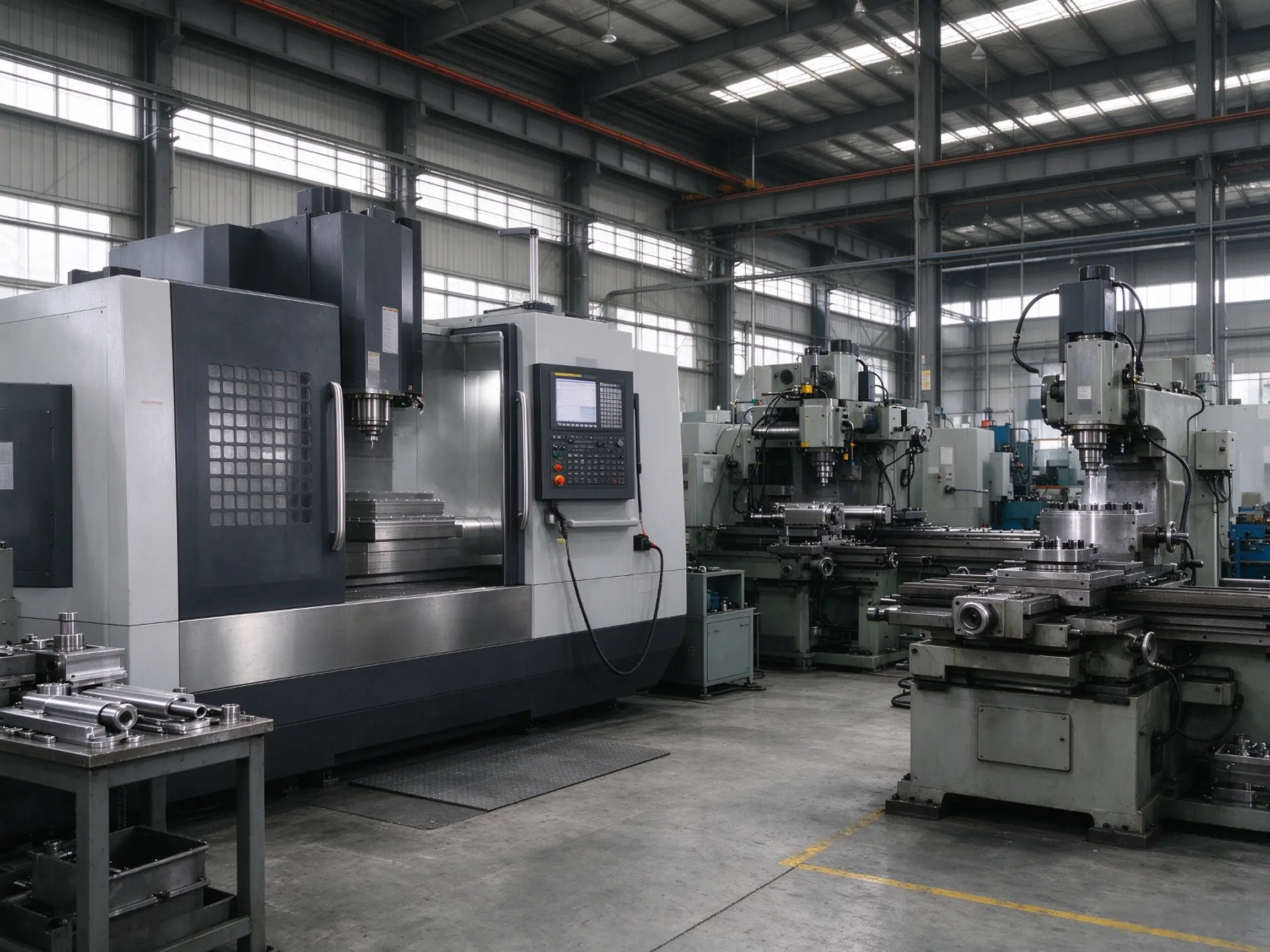
Panel builders use ring and fork terminals for PLC I/O wiring, contactors and terminal blocks where a secure screw connection is required.

Harness makers specify colour-coded insulated terminals for lighting, sensor and power circuits, where vibration resistance matters.
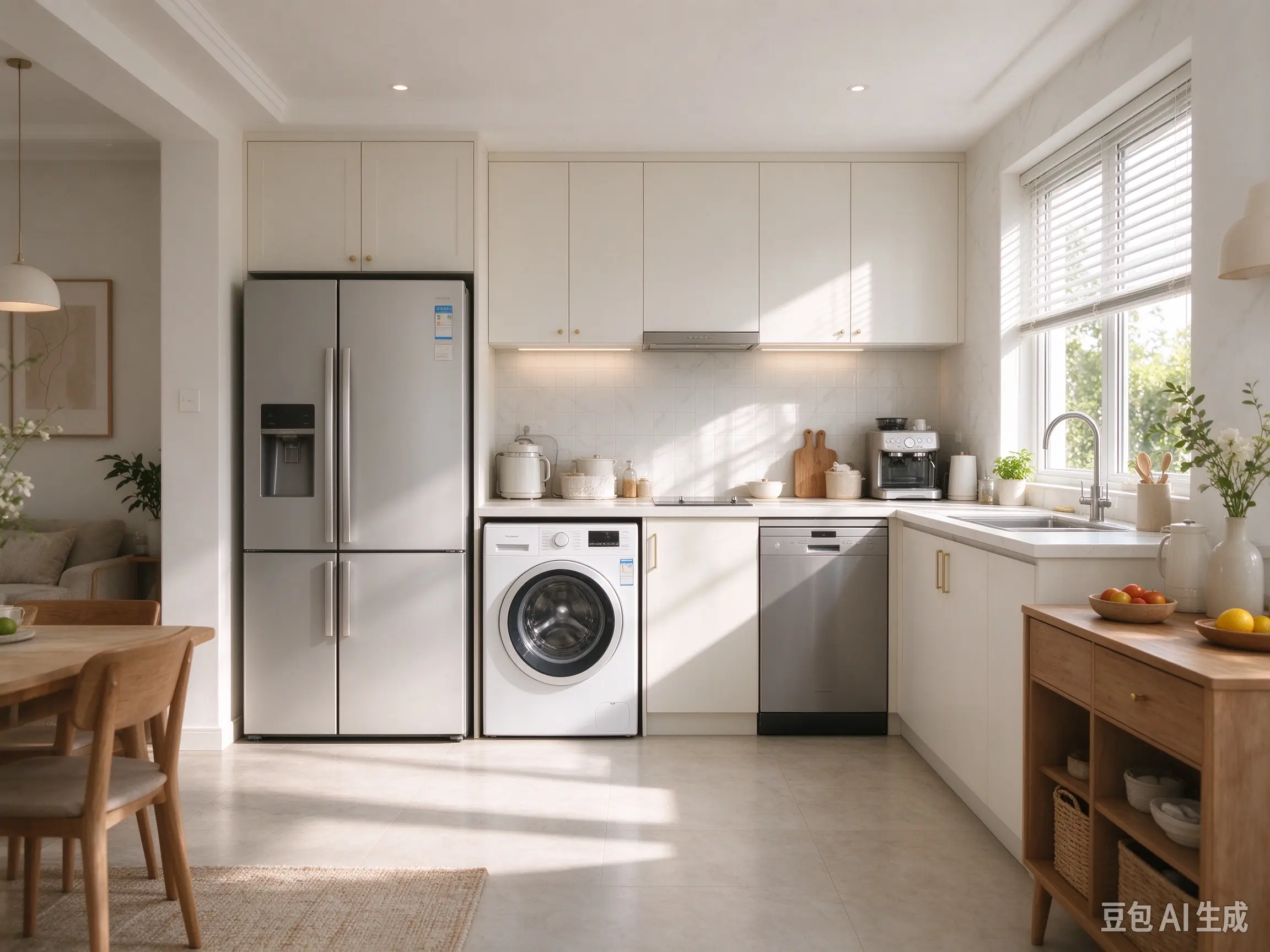
Washing machines, air conditioners and ovens rely on fully insulated terminals for internal wiring that must stay safe and compact.

Machine builders fit ring, fork and disconnect terminals to motors, sensors and control cabinets operating in demanding environments.
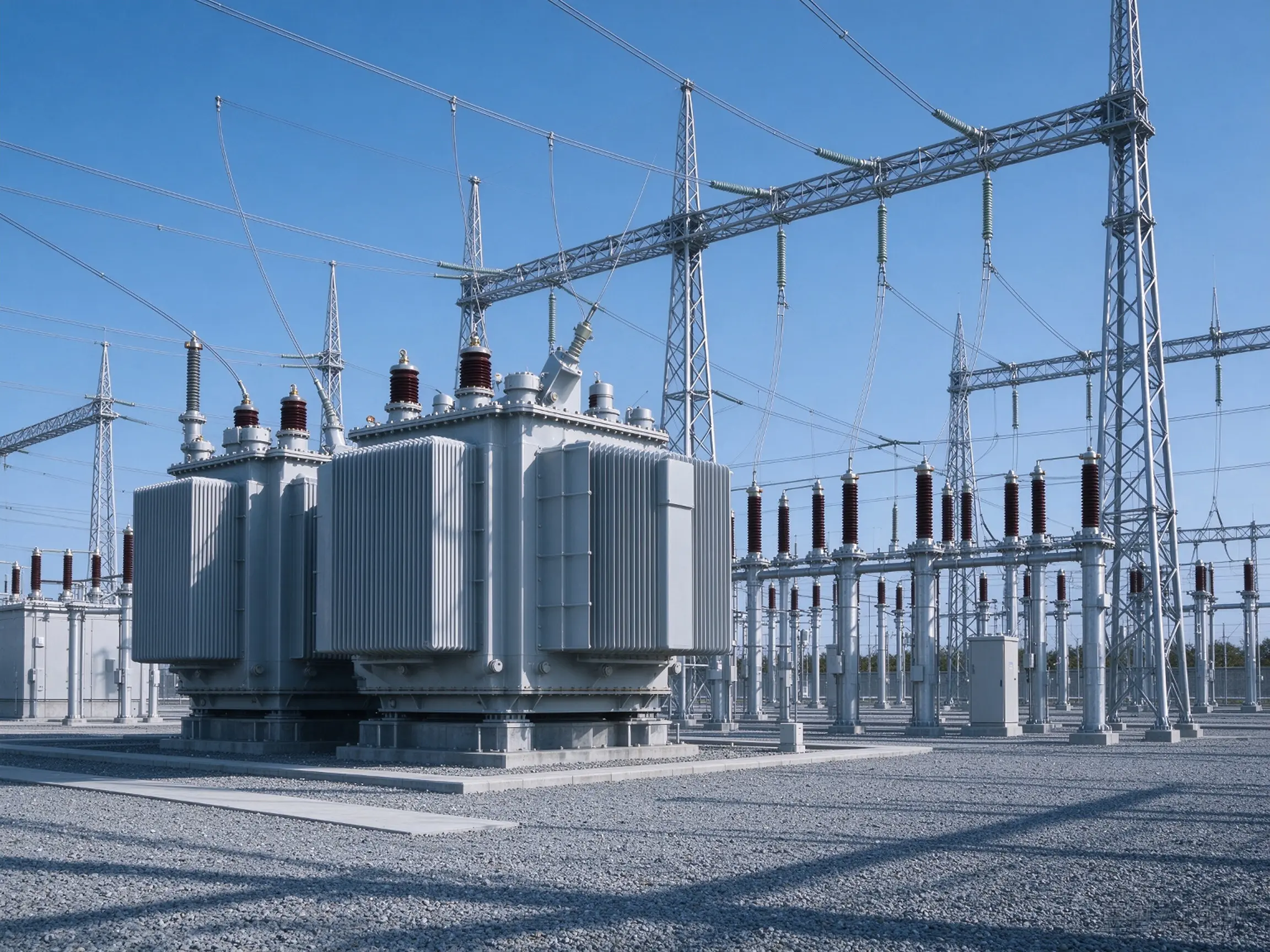
Switchgear and distribution boards use tin-plated copper terminals for stable current transfer and resistance to corrosion.
Insulated terminals connect stranded copper wire to screws, studs and tabs on electrical equipment. The PVC sleeve covers the crimped barrel, so the joint stays insulated and protected from vibration and moisture. Typical applications include control panels, automotive wiring harnesses, household appliances and industrial machinery.
PHOENIX supplies 15 insulated series: ring (RV), fork (SV), blade (DBV) and pin (PTV) terminals, male and female disconnect (MDD / FDD) including fully insulated types, hook (PBDD), male and female bullet (MPD / FRD), nylon flag (FLDNY), spring-loaded (MRFNY / FRFNY), and heat shrink ring and fork (RHB / SHB).
Match three values: the wire cross-section (0.5–1.5 mm² red, 1.5–2.5 mm² blue, 2.5–4 mm² black, 4–6 mm² yellow), the connection type your stud or tab needs, and the stud hole, blade width or pin diameter. For wet or high-vibration locations choose heat shrink insulated types.
A ring terminal completely encircles the stud, so it cannot come off without removing the screw — the more secure choice where vibration is present. A fork terminal slides under a loosened screw and can be fitted or replaced without removing it, which speeds up assembly and maintenance.
Insulated terminal color coding indicates the wire size range: Red terminals fit 0.5–1.5 mm² (22–16 AWG) wire, Blue terminals fit 1.5–2.5 mm² (16–14 AWG), Yellow terminals fit 4–6 mm² (12–10 AWG), and Black terminals fit 2.5–4 mm² wire. This color-coding system follows industry standards and helps prevent incorrect wire-to-terminal matching during installation.
Yes, insulated crimp terminals are widely used in automotive wiring harnesses for lighting circuits, sensor connections, and power distribution. The PVC insulation protects against vibration, moisture, and temperature fluctuations common in automotive environments. For high-temperature applications (engine compartments), heat shrink insulated terminals provide superior protection up to 125°C.
PVC insulated terminals feature a pre-molded vinyl sleeve that provides basic insulation and strain relief, suitable for most indoor electrical applications. Heat shrink terminals use a dual-wall tubing that shrinks when heated, creating a waterproof seal around the connection. Choose heat shrink terminals for outdoor, marine, or harsh environments where moisture protection is critical.
Insulated crimp terminals are designed primarily for stranded copper wire, which deforms uniformly when crimped to create a gas-tight connection. While they can technically accept solid wire, the crimp may not be as reliable because solid wire does not compress as effectively. For solid wire applications, consider using wire ferrules or terminals specifically rated for solid conductors.
Use a ratcheting crimp tool with insulated terminal dies that match your wire size. Professional-grade tools feature color-coded crimping cavities (red, blue, yellow) corresponding to terminal sizes, and a ratchet mechanism that ensures a complete crimp cycle. Avoid using pliers or non-ratcheting tools, as they produce inconsistent crimps that may fail in service. For high-volume production, consider pneumatic or electric crimping machines.
Partially insulated terminals have PVC covering the crimp barrel but leave the metal connection end exposed, allowing visual inspection and easy connection to terminal blocks or studs. Fully insulated terminals (like our FDD Full series) cover both the barrel and the connection end, providing complete electrical isolation. Fully insulated types are required in confined spaces where adjacent terminals might touch, preventing short circuits.
Yes, all PHOENIX insulated terminals are manufactured in compliance with RoHS (Restriction of Hazardous Substances) directives, restricting the use of lead, mercury, cadmium, and other hazardous materials. Our terminals use tin-plated T2 copper barrels and lead-free PVC insulation, meeting European Union environmental standards and suitable for export to international markets.
Current ratings depend on wire size: 0.5–1.5 mm² (red) terminals handle up to 19A, 1.5–2.5 mm² (blue) up to 27A, 2.5–4 mm² (black) up to 37A, and 4–6 mm² (yellow) up to 48A. These ratings assume a properly crimped connection in a 30°C ambient temperature. Actual ratings may vary based on installation conditions, wire type, and operating environment. Always consult the manufacturer's specifications for critical applications.
Standard PVC insulated terminals are rated for continuous operation up to 105°C. For higher temperatures found in engine compartments or industrial heating equipment, our heat shrink ring (RHB) and fork (SHB) terminals are rated up to 125°C. For extreme high-temperature applications above 125°C, consider non-insulated terminals with separate high-temperature sleeving or ceramic insulators.
Tell us your wire size and requirements, and we will help you find the right solution.
Request a Quote